


Building a home in Kerala? Let’s start with a conversation.
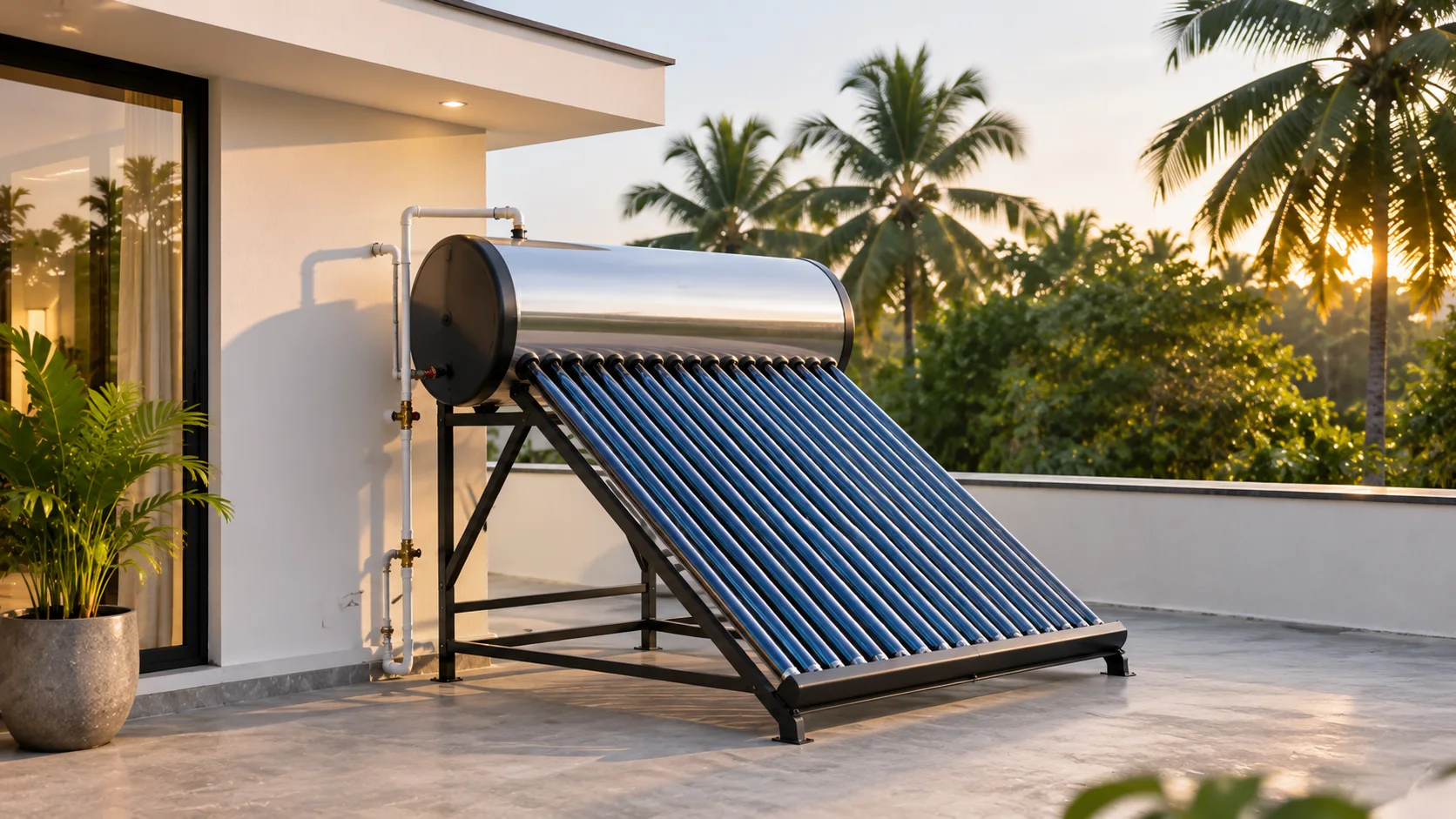
What size solar water heater?
Tell us who bathes and how. See the tank size in litres a day, roof space, weight, the right type for your water and the electricity it saves.
Size a solar water heater by the hot water you use: about 20 litres for a bucket bath and 30 for a shower. A family of four showering once a day usually needs a 150 litre system, and 100 litres suits two to four people taking bucket baths.
Rates and rules last updated 17 November 2026 · Checked by the Build 1 engineering team
Who uses hot water
People, bathrooms and how they bathe.
About 108 litres of hot water a day.
Other hot water uses
Switch on what applies.
Your house
Water, roof and the heater you use now.
For 4 people and 2 bathrooms · bucket bath
Where your hot water goes
Litres a day of hot water at about 60°C, mixed with cold at the tap. A 10% margin is added before picking the tank.
Sun through the year
In the monsoon (June to August) the sun gives less, so keep the electric backup heater in the tank on a timer.
Which type to choose
- Heats well on cloudy days
- Needs about 2.3 sq m
- Glass tubes can scale up with hard water
- Best for hard or salty well water
- Strong and long-lasting
- Needs about 3 sq m
With soft water a tube system gives more hot water in the monsoon for the roof space.
Plan it right
- Put the panels facing south, tilted about 10° to 15°, where nothing shades them from 9 am to 4 pm.
- The cold water tank must sit at least 0.5 m above the solar tank so water flows without a pump.
- Keep a 1 to 2 kW electric backup element in the tank, with a timer, for rainy days.
Figures last updated 17 November 2026. A planning estimate.
No black box. Here is the logic.
Reviewed on 17 November 2026. The numbers are in the table further down.
Hot water a day
- People × baths × litres per bath (bucket 20, shower 30, rain shower 45).
- Plus basin, kitchen and warm washing.
- Plus a margin of 10%, then rounded up to the next standard size.
Standard sizes
- Tanks come in 100, 150, 200, 250, 300 and 500 litres a day.
- Above 500, two systems serve the house better.
Roof and weight
- About 1.5 sq m of roof per 100 L for tubes, 2 sq m for flat plate.
- Weight: the water itself plus about 60 kg per 100 L for the stand.
Savings
- About 1,500 units a year per 100 L a day, when it replaces an electric geyser and is fully used.
- Less in the monsoon: the monthly sun share is in the table.
Every number is on this page, and dated.
Last updated 17 November 2026. Litres per use and roof space are typical figures from MNRE guidance and suppliers; your bathing habits matter more than any average.
General
Click a number in the editor to change it, then press Save.
17 November 2026
10 %
10 %
Hot water per use
Litres of hot water at about 60°C, which is mixed with cold at the tap.
20 L
30 L
45 L
80 L
4 L
3 L
45 L
0.5
Roof and weight
Space for the collector and weight on the roof for every 100 litres a day.
1.5 sq m
2 sq m
60 kg
Savings
Used for the electricity saved when the solar heater replaces an electric geyser.
1,500 units
7 ₹
820 g
95, 95, 95, 95, 85, 55, 50, 60, 75, 80, 85, 90 %
To change a number: open the site editor, click the number, type the new value and press Save. The tool uses it straight away.
Four things to plan early.
A solar heater is simple, but its place on the roof and the pipe route are decided when the house is drawn.
Fix the roof spot
South-facing, no shade from 9 to 4, on a slab that takes about 3 kg per litre of tank.
Lift the cold tank
The cold water tank sits at least 0.5 m above the solar tank, so water flows by gravity.
Short hot pipes
Keep the most used bathroom closest, use insulated CPVC pipe, and avoid long runs.
Keep the backup
A 1 to 2 kW element on a timer covers rainy days. See the home systems planner.
Questions about solar water heaters.
What size solar water heater do I need?
Size it by the hot water you use, not the house size. A bucket bath takes about 20 litres of hot water and a shower about 30, so a family of four bathing once a day with a shower needs about 120 litres plus basin and kitchen use. That usually means a 150 litre system. A 100 litre system suits two to four people taking bucket baths.
What does litres per day mean?
A 100 LPD system heats about 100 litres of water to around 60°C on a sunny day. You mix it with cold water at the tap, so you get more warm water than the rating suggests.
Evacuated tube or flat plate?
Evacuated tube systems heat better on cloudy days and need less roof, which suits Kerala's long monsoon. Flat plate systems are sturdier and better for hard or salty well water, because scale can block glass tubes. With hard water, choose flat plate or a system with a heat exchanger.
Will it work in the monsoon?
Partly. On heavy rain days the sun gives much less heat, so keep the 1 to 2 kW electric backup element in the tank and put it on a timer. The tool shows roughly how much of your hot water comes from the sun in each month.
How much electricity does it save?
A 100 litre a day system that replaces an electric geyser saves about 1,500 units a year when it is fully used. If you use less hot water than the tank holds, you save less.
Where should it go on the roof?
On a strong slab, facing south, with no shade from about 9 am to 4 pm. The cold water tank must sit above the solar tank so water flows by gravity. Plan the position, the stand and the hot water pipe route while the house is being drawn.
How heavy is it?
A full 200 litre system with its stand weighs about 300 kg. A normal RCC roof slab carries it, but sloped tile or sheet roofs need a proper stand. Tell your engineer where it will sit.
How current are the numbers?
The date at the top shows when the figures were reviewed. Every number is in the table on this page and can be updated.
Let’s plan your hot water.
Every good project starts with a clear conversation. Share your plot, approximate area, requirements and budget range, and we’ll suggest the right route and package.
Free site visit and plot check
Anywhere in Thrissur and Ernakulam districts.
Your price in writing in 7 days
Itemised, within 7 days of the site visit.
See a live site on a Saturday
Walk a Build 1 site with our engineer.